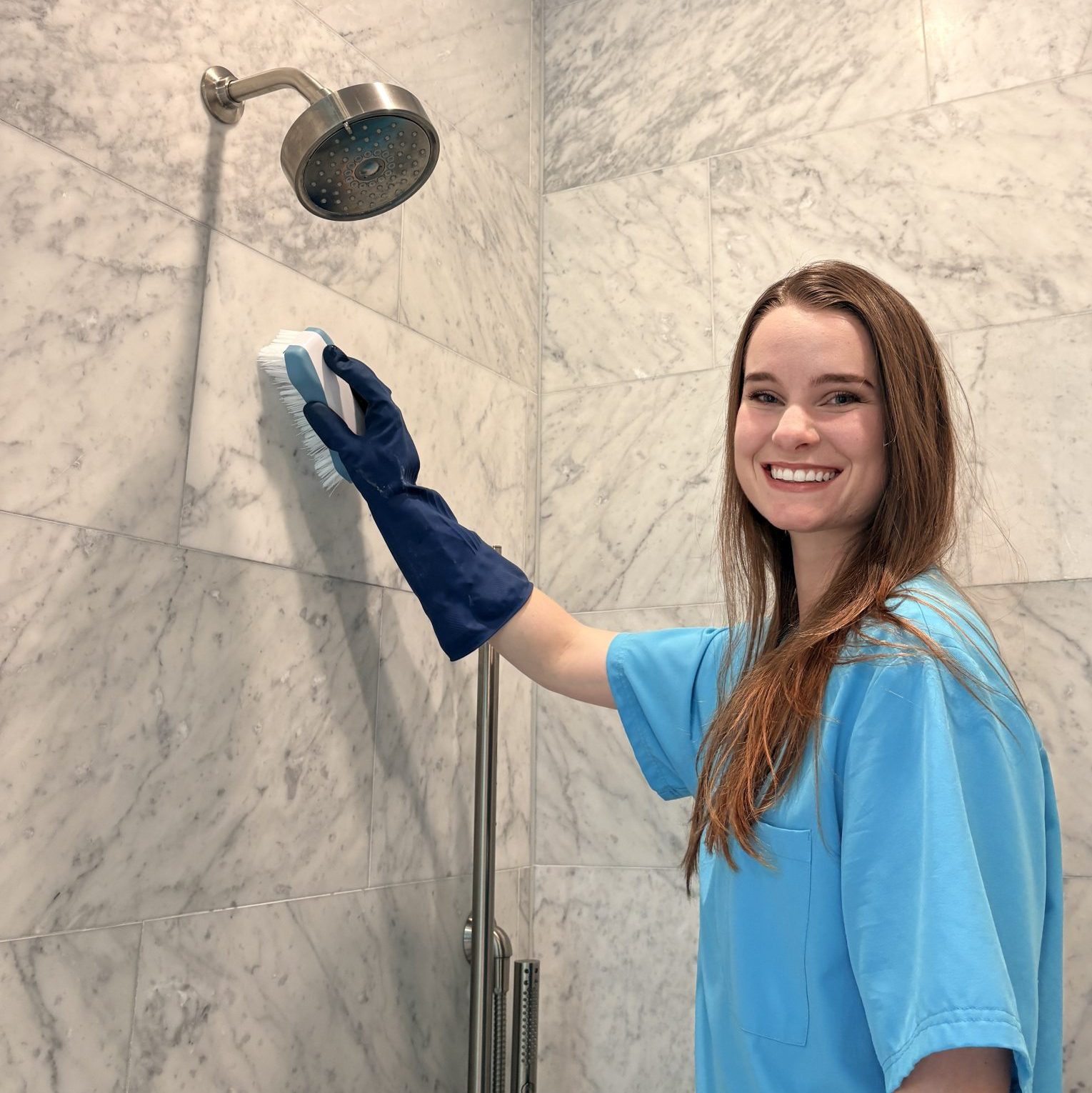
Find out why dust keeps returning, learn simple upkeep tips, and see how The Pampered House helps DFW homeowners with dusting, floors, blinds, and baseboards.
7 Common Cleaning Mistakes That Can Damage Your Home’s Surfaces

7 Common Cleaning Mistakes That Can Damage Your Home’s Surfaces
You finish cleaning, step back, and notice a dull patch on the counter or new marks on a fixture. It is frustrating when the effort you put into caring for your home leaves a surface looking worse. Often, the problem is a mismatch between the material, the cleaning product, and the tool being used.
For homeowners in Fort Worth, Arlington, Grapevine, and surrounding DFW communities, knowing what a surface is made of matters as much as knowing how to clean it. This guide from The Pampered House covers seven cleaning mistakes to avoid, along with practical alternatives for protecting the finishes you use every day.
1. Using Vinegar on Natural Stone
Vinegar is often suggested for household cleaning, but it is a poor choice for acid-sensitive stone. Marble, limestone, and travertine can develop dull or etched patches when exposed to acidic products. The Natural Stone Institute’s care guidance warns that vinegar, lemon, and other acids can damage these materials.
This matters when tackling North Texas bathroom buildup. In its 2023 water-quality report, the City of Frisco explains that hard water can leave limescale on plumbing fixtures. That does not make an acidic scale remover suitable for every nearby surface, especially a marble vanity or stone shower surround. For related prevention tips, see how North Texas hard water affects your bathroom.
What to do instead: Identify the stone and use a cleaner approved for that material, following its dilution and rinsing instructions. Keep spray and runoff away from adjoining surfaces. If a dull mark remains, do not keep scrubbing; etching may need a stone-restoration specialist rather than another round of cleaning.
2. Soaking Wood Floors While Mopping
A dripping mop may seem like an efficient way to loosen dirt, but extra moisture is not a shortcut to a better clean. Bruce Flooring’s wood-floor cleaning guide explains that excess water can damage hardwood and describes using a regular mop that is thoroughly wrung out rather than saturated. Always follow the care instructions for your exact floor and finish.
What to do instead: Sweep wood floors first with a soft-bristled broom to remove loose dirt and grit before mopping. Use a cleaner approved for your floor’s finish and follow its application instructions. If those instructions allow damp mopping, use a clean, regular mop and wring it out thoroughly so it is only lightly damp. Clean small sections, dry excess cleaner promptly, and never leave standing liquid behind. If your flooring manufacturer prohibits water mopping, follow its specified cleaner-and-mop method instead.
If an entryway is dirty after wet shoes or muddy paws come through, start by sweeping away the debris and wiping up tracked-in moisture. Do not compensate by repeatedly flooding the whole floor. A targeted cleanup with the right product gives you more control over moisture.
3. Assuming a Steam Mop Is Safe for Every Floor
A floor can look sturdy and still be unsuitable for steam cleaning. Heat and moisture are a different challenge from ordinary damp mopping. Bruce Flooring’s hardwood-care FAQ warns that introducing heat and moisture can damage hardwood floors and that damage from a steam mop is not covered under its warranty.
What to do instead: Check the flooring manufacturer’s care instructions before using a steam mop. Do not rely only on the mop’s packaging, the appearance of the planks, or a description such as “sealed.” If the exact flooring product is unknown, use a method its installer or manufacturer can confirm is suitable.
Two wood-look floors in the same house may be different materials. Keep their care instructions with your household records so you can share them with anyone helping you clean. For wood floors, sweep away loose dirt before using the cleaner and mop method approved for that particular flooring.
4. Reaching for an Abrasive Pad on Delicate Finishes
A stubborn mark can make a scouring pad tempting. On a stainless steel sink or a decorative fixture, however, the tool itself may be the problem. A method appropriate for one surface should not automatically be carried over to another.
For stainless steel sinks, Sterling’s care instructions advise using a nonabrasive cloth or sponge, following the grain, and avoiding steel wool, wire brushes, and abrasive sponge pads.
What to do instead: Start with a clean, soft cloth and a cleaner approved for the exact surface. For faucets, check the instructions for the specific finish; chrome, brushed nickel, and matte black should not be treated as interchangeable. Use only the contact time and rinsing method the product and fixture instructions allow.
If a spot will not lift, pause before increasing pressure or switching to a rougher tool. Identifying the deposit is more useful than scrubbing harder.
5. Using Harsh Cleaners on Quartz Countertops
Quartz countertops are designed for everyday use, but that does not make every kitchen cleaner suitable for them. Caesarstone’s care guidance advises against products such as oven cleaners, drain products, floor strippers, and strong chemicals that can damage the surface.
What to do instead: Follow your countertop brand’s instructions for routine cleaning and stubborn residue. For its surfaces, Caesarstone recommends simple care such as warm soapy water, with products rinsed away thoroughly. Use a soft cloth and check any new approved product in an inconspicuous area first.
When cleaning the oven, sink, or backsplash, pay attention to where overspray lands. A product intended for an adjacent appliance can still reach the countertop. Keep each cleaner on the surface it was selected for, and follow the countertop maker’s instructions if an accidental exposure occurs.
6. Spraying Cleaner Directly onto Screens
A television or computer screen is not the same as an ordinary glass window. Spraying liquid directly onto it can allow moisture to enter the device. Apple’s display-cleaning instructions, for example, warn against direct spraying and the use of ordinary window or household cleaners on its screens.
What to do instead: Turn off and unplug the device as directed by its manufacturer. Use the specified soft, lint-free cloth. If moisture is permitted, lightly dampen the cloth rather than spraying the display, and keep moisture away from openings.
Check the instructions for the exact screen before applying a product. Specialty coatings can require different care. If you schedule house cleaning, point out screens or other delicate items with special instructions so their care can be discussed in advance.
7. Scrubbing Carpet Stains Aggressively
When a drink spills, it is easy to grab a towel and scrub. That extra pressure can damage the carpet’s texture. Shaw Floors recommends blotting spills and warns that abrasive rubbing or scrubbing can fray carpet fibers.
What to do instead: Blot promptly with a clean, white, absorbent cloth. Check the carpet manufacturer’s instructions for that type of spill, and use a spot-cleaning product approved for the carpet. Avoid improvising with a kitchen or bathroom cleaner simply because it is nearby.
If the stain persists, stop experimenting and contact a qualified carpet-cleaning professional. A stain that needs specialist treatment is a separate issue from the routine vacuuming and upkeep that help a room stay tidy.
Before You Clean: A Quick Surface-Care Checklist
- Identify the material and finish. If you are unsure, ask the installer, manufacturer, or property manager before using a stronger product.
- Match the product and tool to the surface. Read the surface-care instructions as well as the cleaner’s label, including dilution, contact time, and rinsing requirements.
- Test an appropriate product discreetly. An inconspicuous test is an extra precaution, not permission to use a product the manufacturer prohibits.
- Watch nearby materials. Protect adjoining stone, wood, metal, and electronics from spray or runoff.
- Keep your cleaner informed. Share care guides, existing damage, and any products or methods you want avoided before a visit.
A clean surface and a restored surface are different things. Routine cleaning cannot reliably reverse etching, worn finishes, scratches, or damaged fibers. Ask the appropriate surface specialist about repair options instead of repeatedly treating the area.
Thoughtful Cleaning for Your North Texas Home
Good cleaning starts with choosing a method that suits your home. When a surface stays cloudy, feels rough, or develops a new mark, more force is not always the answer. Knowing when to stop can be just as important as knowing what to use.
If you are arranging house cleaning in the DFW area, tell The Pampered House about delicate finishes and any manufacturer instructions you already have. That information helps clarify your home’s needs before service.
The Pampered House offers recurring house cleaning and deep cleaning in communities including Fort Worth, Arlington, Mansfield, Keller, Grapevine, Southlake, Grand Prairie, Euless, North Richland Hills, Lewisville, Frisco, and Plano. View our service areas to find your community.
Request a personalized cleaning quote or call (817) 633-2235. Let us know what your home needs, so you can spend more time enjoying it.
Written by Pampered House Maid Service and reviewed by Asa Caviness
Published 10/14/2026
Related Posts